Is This YouTube Video Worth Watching?
Updated Jul 22, 2026 · YS Summarizer
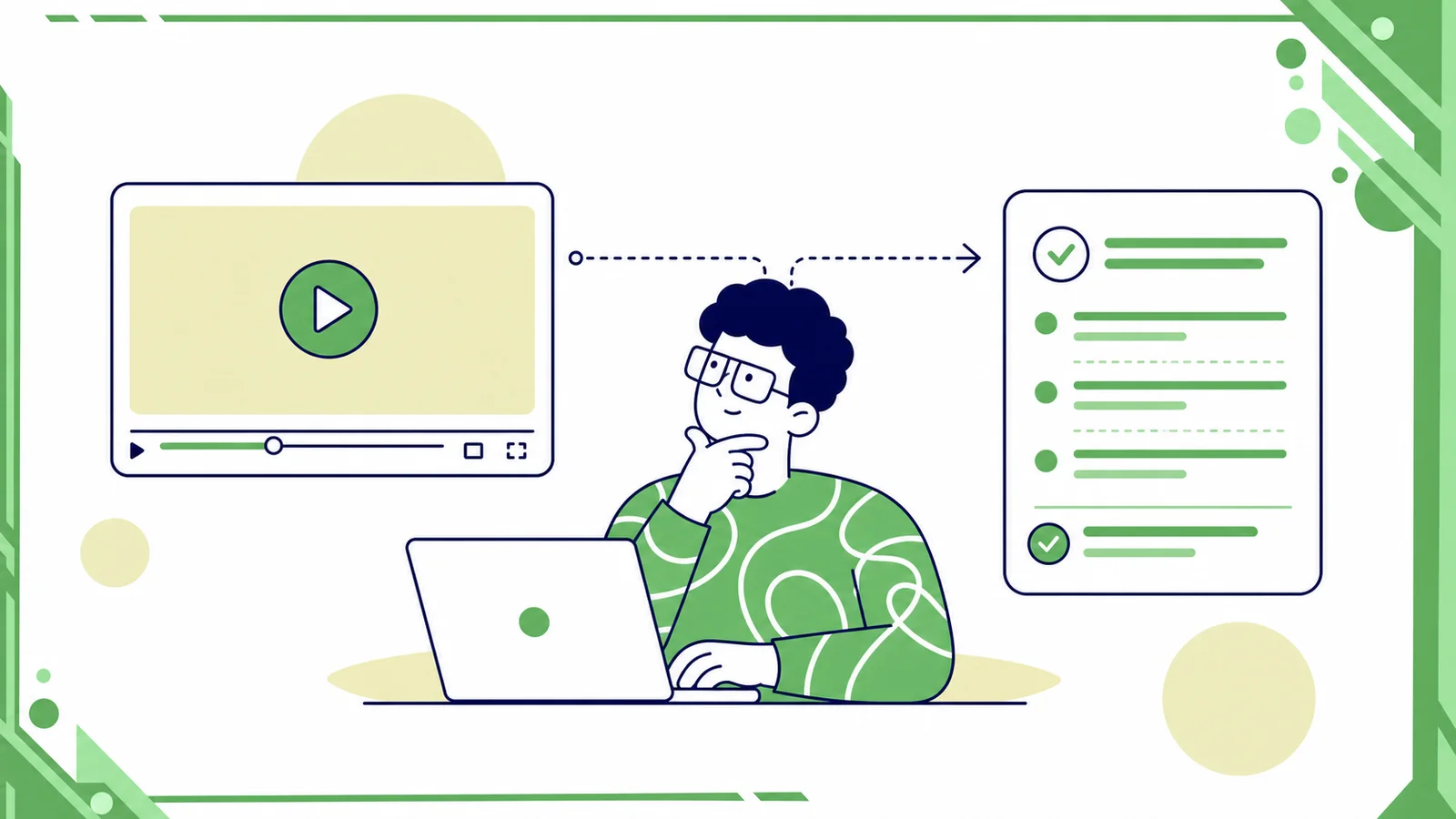
Opening a YouTube video takes one click. Deciding whether it deserves the next ten, thirty, or sixty minutes is harder. A title and thumbnail tell you how a video is being presented, but they rarely reveal whether it answers your question, offers new information, or depends on demonstrations you need to see.
A video summary works best as a map, not a replacement for watching. It helps you understand the subject first, then choose whether to watch everything, inspect selected parts, or find a better source.
Ask three questions before you watch
1. Is the video relevant to your current goal?
Be specific about why you opened it. You may need one answer, a practical method, background on an event, or material for deeper research. Read the summary with that goal in mind instead of following a broad title.
2. Does it add anything new?
Many videos spend a long time introducing a simple point. Look for facts, examples, methods, or arguments you have not already encountered. If the summary only repeats familiar ideas, watching the entire video may not be useful.
3. Does understanding depend on the visuals?
News overviews and spoken arguments often work well as text. Software walkthroughs, experiments, charts, performances, and conversations where tone matters usually require the original video. A summary can identify the conclusion without reproducing the evidence on screen.
Use a summary to make a viewing decision
- Scan the structure: identify the main subjects and how the discussion develops.
- Find the useful claims: check whether the video answers your question and supports its conclusions.
- Mark what needs verification: note the claims, quotations, or demonstrations that still require the original context.
- Choose deliberately: watch in full, inspect the important parts, or move on.
Our YouTube summarizer automates the first pass by reading available captions and producing a structured summary, connected explanation, or short list of takeaways. The saved result also keeps a link to the original video for verification.
When is a summary usually enough?
- Screening several candidate videos.
- Reviewing a lecture or interview you have already watched.
- Getting basic context on a news story.
- Deciding whether a foreign-language video is relevant.
When should you watch the original?
- You need to follow an operation, exercise, or demonstration.
- You plan to quote the speaker or rely on exact numbers.
- The conclusion depends on charts, tone, editing, or on-screen evidence.
- The subject involves medical, legal, financial, or safety decisions.
Conclusion
You do not need to reach the end of a video before deciding whether it was worth starting. Use the summary to understand the structure and information value, then return to the original whenever evidence, context, or experience matters.