Which YouTube Summary Style Should You Choose?
Updated Jul 22, 2026 · YS Summarizer
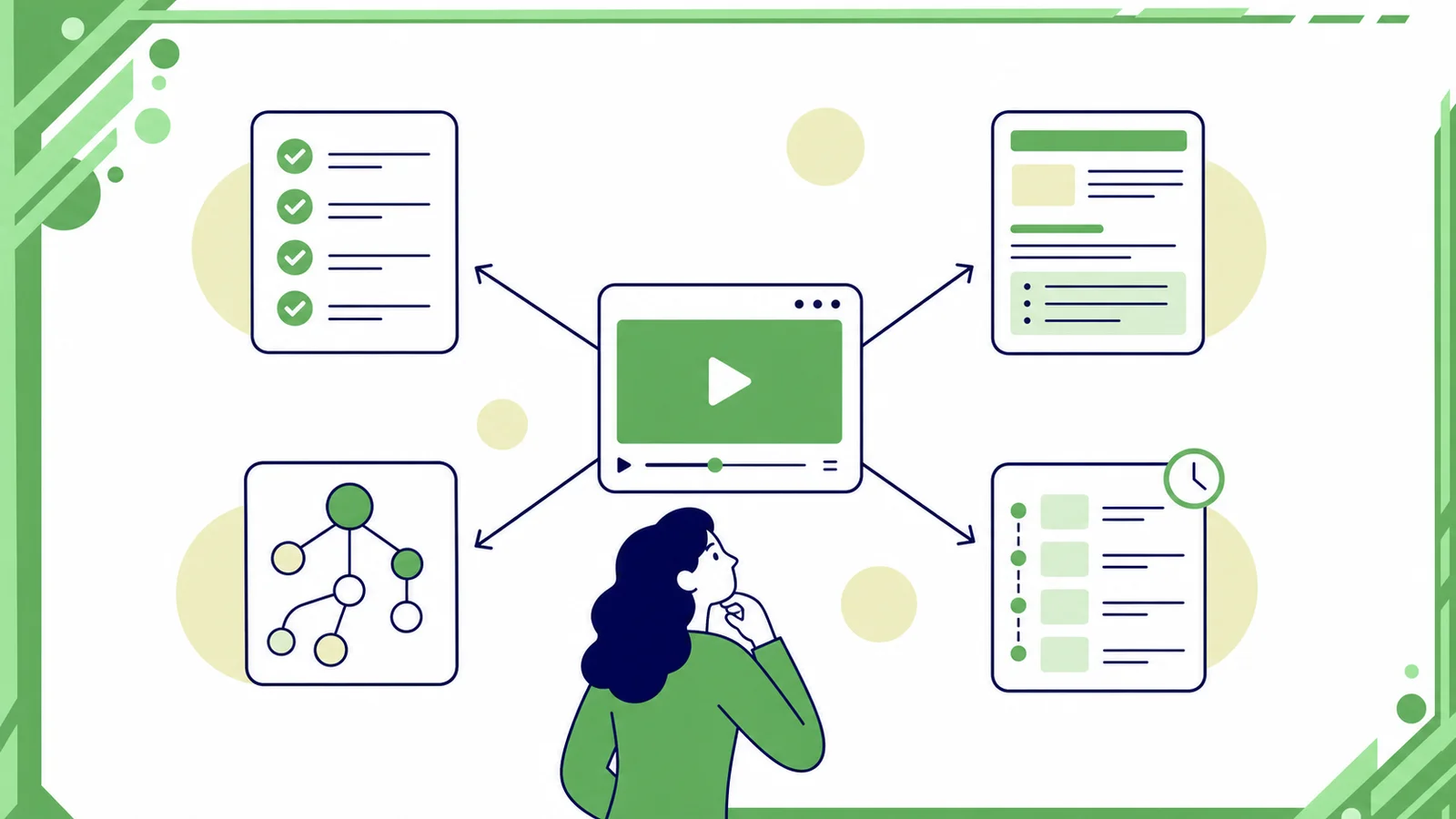
“Summarize this video” leaves out the most important detail: what will you do with the result? The same interview needs a different summary when you are screening it, studying the subject, comparing evidence, following instructions, or briefing a colleague.
A useful summary is not merely short. It preserves the information required for the next decision or action.
Define the task before the format
- What happens after you read it? Decide whether the goal is viewing, learning, research, execution, or communication.
- What cannot be lost? This may include steps, evidence, examples, objections, or exact wording.
- How much detail is appropriate? A one-minute scan and a research memo are different products.
For deciding whether to watch
Ask for the video's question, three to five substantial ideas, what is genuinely new, and whether the content contains excessive repetition. The result should help you make a quick decision rather than document every detail.
For learning and review
Keep concept explanations, examples, relationships, common confusions, and review questions. A useful pattern is “concept — explanation — example — review question.”
For research
Separate claims, reasons, evidence, opposing views, and items that still require external verification. Smooth writing matters less than maintaining clear source boundaries.
For completing a task
Preserve prerequisites, tools, ordered actions, parameters, success criteria, and common failure cases. Mark steps that cannot be reconstructed from captions and must be checked visually.
For sharing or briefing
Provide enough background for the intended reader, then focus on verified facts, relevant opinions, possible consequences, and the decision the reader needs to make.
Choose one of the available styles
- Structured Summary: best for a complete overview and study notes.
- Connected Ideas: best for interviews, arguments, and relationships between ideas.
- Key Takeaways: best for quick screening and compact briefs.
A YouTube summarizer controls how the result is organized. Your own purpose determines which organization is useful.
Check whether the summary works
- Can you complete the intended next step after reading it?
- Were the most important details preserved?
- Are facts, speaker opinions, and AI interpretation clearly separated?
- Does the language fit the real reader?
Conclusion
There is no single best summary of a video. Define the task, choose the information that must survive compression, and then select the closest summary style.